Bangladesh stands at the threshold of a mobility revolution. As Dhaka grapples with some of the world’s worst traffic congestion, the promise of autonomous driving technology offers hope for transformation. Mitsubishi Motors, with its strategic position within the Renault-Nissan-Mitsubishi Alliance, is pioneering autonomous technologies that could reshape how Bangladesh moves. This comprehensive guide explores Mitsubishi’s autonomous driving future and what it means for Bangladesh’s transportation landscape.
Understanding Autonomous Driving: The Five Levels
The industry-standard SAE (Society of Automotive Engineers) levels define driving automation from 0 to 5. Level 0 represents conventional manual driving. Level 1 introduces single automated functions like adaptive cruise control. Level 2 combines multiple functions—steering, acceleration, braking—though drivers must remain attentive. Level 3 allows hands-off driving under specific conditions with driver available to intervene. Level 4 enables full self-driving within defined areas. Level 5 represents complete autonomy under all conditions—currently aspirational technology.
For Bangladesh’s context, the realistic near-term future involves progressive advancement from Level 1 toward Level 2 systems as infrastructure and market conditions evolve.
Mitsubishi’s Current Autonomous Technologies Available in Bangladesh
Super All-Wheel Control (S-AWC): Foundation Technology
Mitsubishi’s S-AWC system, available in the Outlander PHEV and Eclipse Cross, represents crucial foundation technology for autonomous development. S-AWC precisely manages power distribution between wheels, integrating Active Yaw Control, Active Stability Control, Anti-lock Braking, and Traction Control. This comprehensive system integration demonstrates the sensor fusion and coordinated control that autonomous driving requires.
For Bangladesh roads with their unique challenges—sudden obstacles, variable surfaces, heavy monsoon rains—S-AWC’s precise vehicle control proves essential. These capabilities form the foundation for higher automation levels.
Forward Collision Mitigation (FCM): Autonomous Braking
Forward Collision Mitigation on the Eclipse Cross represents Level 1+ autonomous capability. The system uses radar or camera sensors to monitor the road ahead, providing visual and audible warnings when detecting collision risk. If drivers don’t respond, FCM amplifies brake force or applies autonomous emergency braking automatically.
In Dhaka’s dense traffic where distraction could result in rear-end collisions, FCM provides crucial safety buffer, demonstrating autonomous decision-making already available to consumers.
Adaptive Cruise Control and Lane Keeping
Adaptive Cruise Control automatically adjusts speed to maintain safe following distance, while Lane Keeping Assist provides steering inputs to maintain lane position. For Bangladesh’s intercity highways like Dhaka-Chittagong, these features reduce driver fatigue while demonstrating automated speed and steering control fundamental to autonomous driving.
Mitsubishi’s Advanced Autonomous Research
Renault-Nissan-Mitsubishi Alliance Advantage
The Alliance accelerates autonomous development through shared resources, with commitments including 35 new electric vehicle products by 2030 incorporating advanced autonomous features, 80% parts sharing across Alliance models reducing costs, and comprehensive connected car networks. This means Bangladesh gains access to Nissan’s ProPILOT technology and Renault’s urban autonomous research.
Mobile Mapping System (MMS): High-Precision Navigation
Mitsubishi Electric has developed MMS technology creating highly detailed 3D road environment maps. The system integrates GPS antennas, laser scanners, high-sensitivity cameras, and speed sensors maintaining accurate positioning even without GPS signal. MMS enables centimeter-level accuracy essential for autonomous lane navigation.
For Bangladesh, developing MMS coverage represents crucial infrastructure for eventual autonomous deployment.
Solid-State Battery Development
The Alliance is investing in solid-state batteries promising doubled electric range and two-thirds reduced charging time. This proves crucial as autonomous systems consume significant electrical power. For Bangladesh with limited charging infrastructure, improved battery technology becomes essential before widespread autonomous electric vehicle deployment.
Bangladesh’s Autonomous Driving Reality: Challenges and Opportunities
The Traffic Crisis
A joint report by BUET and the World Bank documents Dhaka’s traffic crisis: average vehicle speeds dropped from 21 kph in 2007 to just 4.8 kph in 2022—slower than walking pace. A US National Bureau of Economic Research study ranked Dhaka the slowest city among 1,200 evaluated globally.
The economic impact is staggering. According to BRAC Institute of Government and Development research, traffic congestion costs Bangladesh $11.4 billion annually. BUET’s Accident Research Institute reports 30 million daily trips in Dhaka alone, with the city experiencing approximately 4.2% annual population growth.
Unique Bangladesh Challenges
Bangladesh presents extraordinary challenges for autonomous deployment. Non-lane-based traffic where vehicles don’t maintain discipline creates recognition challenges. Heterogeneous traffic mixing cars, buses, motorcycles, auto-rickshaws, pedal rickshaws, and pedestrians requires complex object detection. Unpredictable behavior including jaywalking and wrong-way driving creates scenarios autonomous systems must handle.
Researchers at Bangladesh University of Engineering and Technology developed the BadODD (Bangladeshi Autonomous Driving Object Detection Dataset) containing 9,825 images with 78,943 objects across 9 districts, specifically addressing Bangladesh conditions including unique vehicle types not found in international datasets.
Infrastructure Development Requirements
Successful autonomous deployment requires smart traffic signals with vehicle-to-infrastructure communication, high-definition road network mapping, reliable 5G cellular coverage, and improved road surfaces with consistent lane marking. Bangladesh’s National Strategy for Artificial Intelligence (2019-2024) and National AI Policy 2024 emphasize autonomous vehicle adoption, but implementation requires coordinated effort.
The government’s current pilot of semi-automatic signals at 22 Dhaka intersections represents early infrastructure steps.
Regulatory Framework Needs
Bangladesh currently lacks comprehensive autonomous vehicle regulations. Development requires defining liability in autonomous accidents, establishing testing protocols for Bangladesh conditions, creating safety certification processes, and developing licensing requirements for semi-autonomous vehicles.
Mitsubishi’s Potential Solutions for Bangladesh
Autonomous Public Transportation First
Rather than immediately pursuing fully autonomous private vehicles in chaotic traffic, Bangladesh’s autonomous future likely begins with dedicated public transportation. Autonomous buses on dedicated BRT lanes could provide reliable mass transit while avoiding mixed traffic challenges.
Benefits include elimination of driver labor costs, 24/7 operation without fatigue, perfect schedule adherence, and consistent safe operation. For Bangladesh where bus driver behavior contributes to accidents and congestion, autonomous buses offer transformative potential.
Outlander PHEV Autonomous Evolution
Future Outlander PHEV iterations could incorporate highway autonomous driving on the Dhaka-Chittagong expressway, intelligent parking assist for tight Bangladesh spaces, automated emergency maneuvering avoiding sudden obstacles, and predictive route optimization using real-time traffic data.
For families, an Outlander PHEV with Level 3 highway autonomy could transform intercity travel—manual driving through Dhaka’s chaos, then autonomous mode on the expressway for relaxed journeys.
L200 Autonomous Fleet Applications
The L200 could pioneer autonomous commercial vehicles in controlled environments like Chittagong port container transfers, construction site material movement, tea estate harvest transport, and industrial zone worker shuttles. These applications prove simpler than full road autonomy while delivering immediate productivity benefits.
Xpander Shared Autonomous Mobility
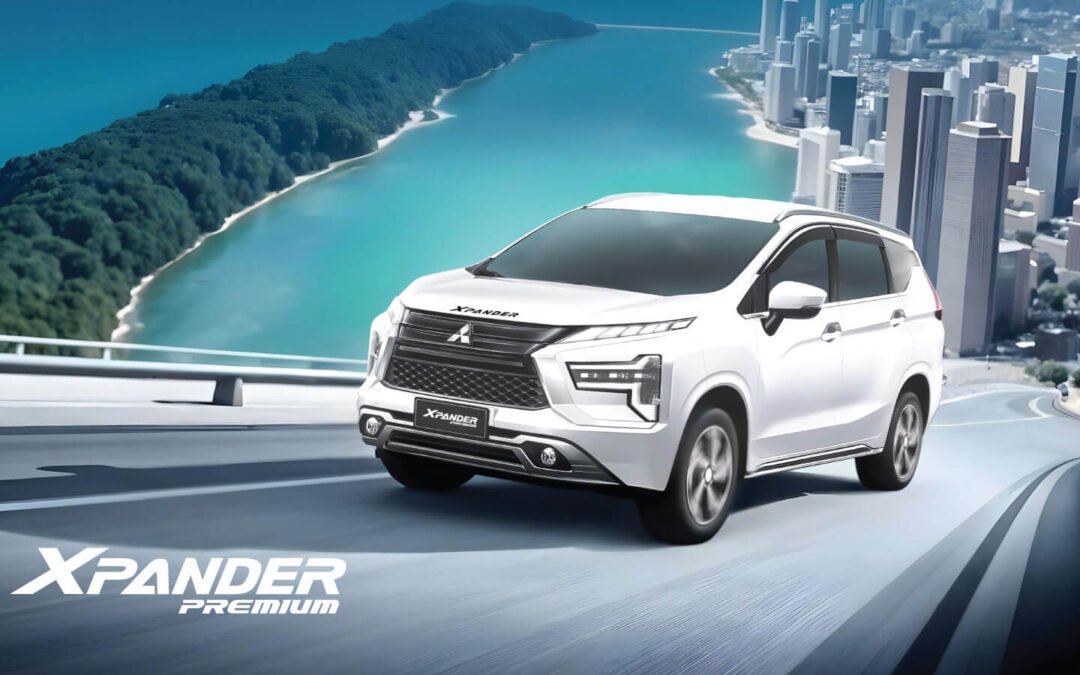
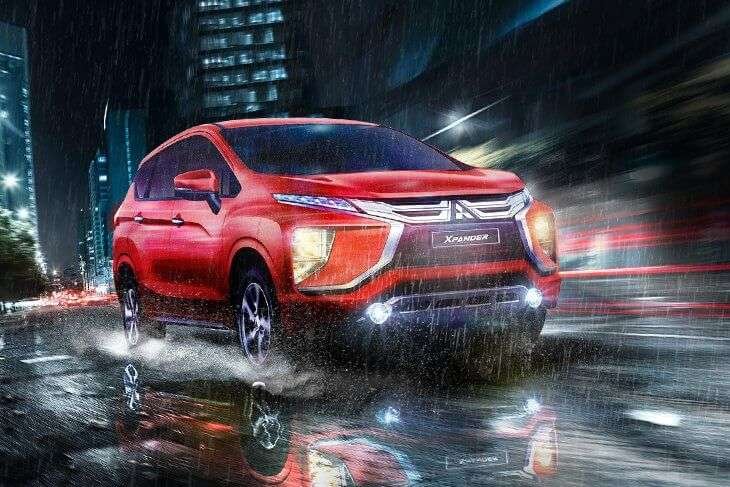
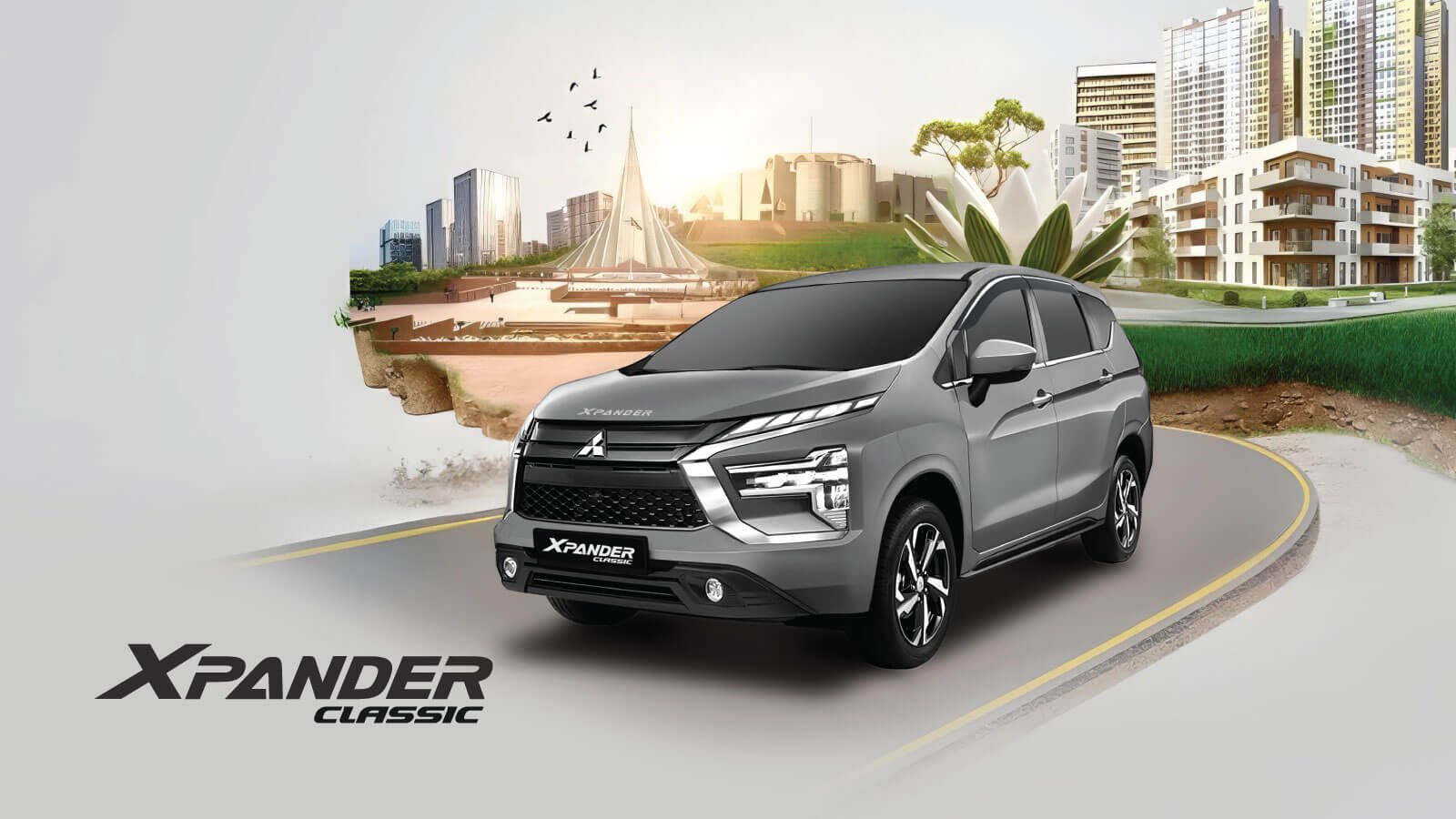
The Xpander, manufactured in Bangladesh at Rancon Auto Industries Limited, could eventually support autonomous ride-sharing. Its 7-passenger capacity, efficient powertrain, and local manufacturing provide ideal characteristics for future autonomous fleet services, potentially reducing Dhaka’s vehicle count while improving transportation accessibility.
Timeline: When Autonomous Mitsubishis Could Reach Bangladesh
Near Term (2026-2028): Enhanced Driver Assistance
Immediate enhancements include expanded Forward Collision Mitigation across more models, improved adaptive cruise control, enhanced lane keeping assist, and automated parking assistance. These Level 1-2 features provide tangible benefits while building consumer familiarity.
Medium Term (2029-2032): Highway Autonomy
Medium-term introduction of Level 3 highway automation includes hands-off cruising on expressways, automated lane changing, traffic jam assist below 60 kph, and automatic emergency evasion. Implementation requires improved highway infrastructure including better lane marking and smart signage—opportunity for new expressway development to incorporate these requirements.
Long Term (2033-2040): Urban Autonomy
Longer-term possibilities include limited urban autonomy in structured areas like Dhaka Cantonment, autonomous parking in designated facilities, and autonomous valet service. Fully autonomous urban operation remains challenging, but controlled deployments in specific areas could prove successful.
Beyond 2040 envisions comprehensive smart city integration with coordinated autonomous vehicles, V2X communication networks, and reduced private ownership as autonomous shared mobility provides superior access.
Mitsubishi’s Competitive Advantages for Bangladesh
Local Manufacturing Presence
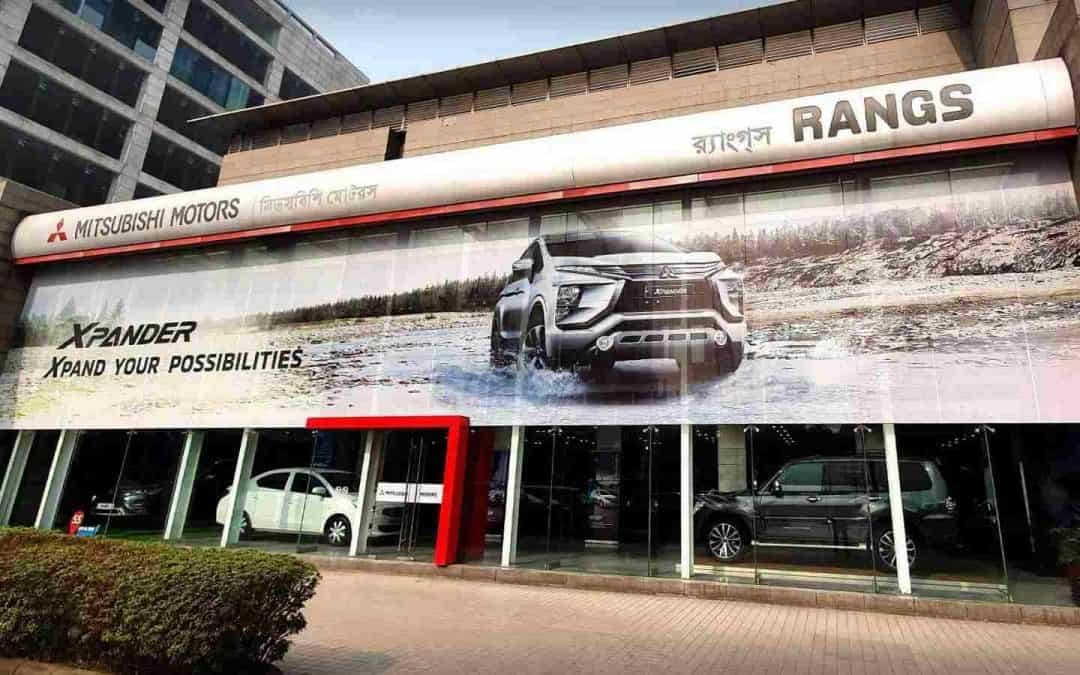
Mitsubishi’s Xpander assembly at Rancon Auto Industries Limited provides crucial advantage. Local manufacturing enables faster adaptation to Bangladesh conditions, customized sensor configurations, integration with Bangladesh-specific infrastructure, and local service capability for autonomous systems. As autonomous features become available globally, Mitsubishi Bangladesh can potentially integrate them faster than imported competitors.
Proven Reliability Foundation
Mitsubishi’s century-long reliability reputation proves crucial for autonomous acceptance. People must trust autonomous systems with their lives, built on proven vehicle reliability. Mitsubishi vehicles’ reputation for surviving harsh Bangladesh conditions—monsoon floods, summer heat, poor roads—provides trust foundation for autonomous technology acceptance.
Alliance Technology Access
Through the Renault-Nissan-Mitsubishi Alliance, Mitsubishi Bangladesh gains access to world-class autonomous development including Nissan’s ProPILOT system and Renault’s urban autonomous research. This accelerates timelines and improves technological sophistication.
Service Network Support
Mitsubishi Bangladesh’s established service network at Dhaka (215 Bir Uttam Mir Shawkat Sarak, Tejgaon), Chattogram (Rancon Arcade, 1 Shahid Abdul Halim Road, GEC Crossing), Khulna (Car Imperial, B-27 Majid Sharani, Shonadanga), and Bogura (Paiker Plaza, Borogola Rangpur Road) provides a foundation for autonomous vehicle support upgradeable with autonomous-specific capabilities.
Smart City Integration Context
Dhaka Smart City Foundation
Dhaka’s smart city transformation creates essential autonomous vehicle infrastructure. Current initiatives include AI-based traffic management pilots, smart traffic signal deployment at 22 intersections, metro rail and public transportation improvements, and road infrastructure upgrades.
BUET research emphasizes governance and transportation as highest smart city priorities. Autonomous vehicles fit naturally into this transformation.
Environmental Benefits
Autonomous vehicles work best as electric vehicles, delivering environmental benefits crucial for Bangladesh. Benefits include reduced emissions improving Dhaka’s air quality, optimized efficiency through better driving, regenerative braking reducing energy consumption, and eventual renewable energy integration.
Mitsubishi’s plug-in hybrid expertise positions them well for electric autonomous vehicles, with the Outlander PHEV demonstrating capabilities that future full-electric autonomous models will build upon.
Preparing for the Autonomous Future
Understanding Realistic Expectations
Bangladesh consumers should understand both autonomous potential and limitations. Systems aren’t perfect and have weather-related constraints. Heavy monsoon rain can impair sensors. Complex scenarios may exceed capabilities requiring human intervention. Software updates will be necessary for improvements.
Autonomous vehicles won’t immediately solve all traffic problems. They require proper infrastructure, and mixed autonomous-manual traffic creates transition challenges. Full benefits emerge only with widespread adoption.
Current Models: Getting Started
Bangladesh consumers can prepare by experiencing current driver assistance technologies. The Eclipse Cross demonstrates Forward Collision Mitigation, the Outlander shows adaptive cruise control, and the Xpander Premium provides 360° camera assistance. These technologies provide autonomous capability taste while delivering real benefits today.
Investment Considerations
When purchasing Mitsubishi vehicles, consider autonomous potential. Models with comprehensive sensor suites may receive autonomous upgrades through software updates. Advanced electrical systems better support future autonomous features. Mitsubishi’s Alliance membership and local manufacturing presence suggest strong Bangladesh autonomous deployment support as technology matures.
Conclusion: Mitsubishi Leading Bangladesh’s Autonomous Future
The autonomous revolution will transform Bangladesh mobility, with Mitsubishi Motors positioned to lead through Alliance technology access, local manufacturing, proven reliability, and comprehensive service networks. The journey from today’s driver assistance to tomorrow’s fully autonomous vehicles will occur progressively over two decades.
Near-term enhanced safety features will save lives. Medium-term highway autonomy will transform intercity travel. Long-term urban autonomy could fundamentally reshape Dhaka mobility. Bangladesh faces extraordinary transportation challenges requiring innovative solutions. Autonomous vehicles offer potential to dramatically improve traffic flow, reduce accidents, increase accessibility, and create more livable cities.
Mitsubishi’s proven Bangladesh commitment through local assembly, comprehensive service, and decades of reliable performance positions them as the trusted automotive partner for navigating this autonomous future. Visit Mitsubishi Motors Bangladesh showrooms to experience current driver assistance technologies and learn about autonomous preparation.
Contact Mitsubishi Bangladesh at 09666 704 704 or mitsubishi@rancon.com.bd to discuss how vehicles incorporate the latest safety and autonomous technologies. The autonomous future is coming to Bangladesh—the question isn’t whether it will arrive, but who will lead the transformation.
With a century of innovation, global Alliance partnership, local manufacturing commitment, and deep Bangladesh understanding, Mitsubishi Motors stands ready to guide Bangladesh into this autonomous future. Your journey into autonomous mobility starts today with Mitsubishi driver assistance technologies.
Experience the future, available now.
Manufacturer: Mitsubishi Motors Corporation (global site). Videos and updates: Mitsubishi Motors Bangladesh on YouTube · Facebook.